How can we help you?

Get to know us, discover what we do and start the conversation.

Request a call back
Request a call back

    We're here.

    Leave your details below and we'll do the rest.

    One of our team will be in touch soon.


    As part of Brake’s Road Safety Week 2026, now seems to be the perfect time to remind drivers of the importance of winter preparation.

    Colder, darker months place extra pressure on your vehicle, so now is the moment to make sure it’s in tip-top condition: check your tyres for adequate tread, ensure lights and wipers are working properly and top up screenwash and antifreeze. Last, but certainly not least, never ignore dashboard warning lights – they’re often the first sign that something needs attention.

    A well-maintained vehicle is far better equipped to handle icy roads, heavy rain and reduced visibility, helping keep both you and other road users safe throughout the winter season.


    Lower sun

    With the evenings drawing in quicker, the sun is lower in the sky. That means you’ll need to take extra care when driving home from school or work.

    Make sure your car is fitted with a pull-down sun visor and, if possible, a fade-in sun strip across the top of your windscreen.

    One of the most important ways to stay safe when driving towards the sun is to leave enough space between your vehicle and the vehicle in front of you.

    Other tips include keeping on top of your car’s maintenance such as cleaning your windshield inside and out, checking it for cracks and avoiding putting reflective or bright objects on the dashboard.

    Longer, darker nights

    Road crashes increase by 11% when the clocks go back, according to the AA.

    In 2023 alone, there were 3,680 collisions where someone was injured or killed because the driver’s vision was affected by winter weather or a low, dazzling sun – a figure that can be reduced if we take the right safety measures.

    The sun may cause problems, but the darker nights do too! Believe it or not, darkness isn’t the only cause of road traffic collisions – dazzling other drivers with your headlights can also cause an incident.

    Some 91% of the public say that some car headlights are too bright, according to a survey by the RAC. This figure has increased since the introduction of modern “blue” LED headlights, which seem a lot brighter than the halogen kind with the yellow tinge.

    So, is it actually illegal for another driver to dazzle me with their headlights? In fact, some types of LED headlights are illegal – if they’re too blue they can be mistaken for a police car and if they’re mismatched then other drivers may think there are two separate vehicles.

    The MOT Manual states:

    “‘Mandatory headlamps’ are a matched pair of main beam headlamps and a matched pair of dipped-beam headlamps. These can be separate or a single pair of headlamps. Lamps are matched if they: emit light of substantially the same colour and intensity and are the same size and shape that they are symmetrical to each other…”

    Not only can headlights dazzle other drivers head-on, they can also be too bright in wing mirrors and rearview mirrors, potentially obstructing another driver’s view of the road and other vehicles.

    If possible, dim the lights on your dashboard and always remember to dip your headlights in built-up areas or when you’re near other vehicles. You can also purchase some anti-glare glasses for a very reasonable price! The glasses absorb UV light and prevent glare at night from street lamps and the headlights of other vehicles.

    Wet weather

    Driving in wet weather during the Winter months can be challenging, as road conditions and visibility can change dramatically.

    With darker nights setting in earlier, it becomes harder to see potential hazards such as fallen leaves or puddles.

    Rain, fog, and glare from oncoming headlights can further reduce visibility, making it vital to slow down, use dipped headlights, and ensure your windscreen wipers and tyres are in good condition before setting off.

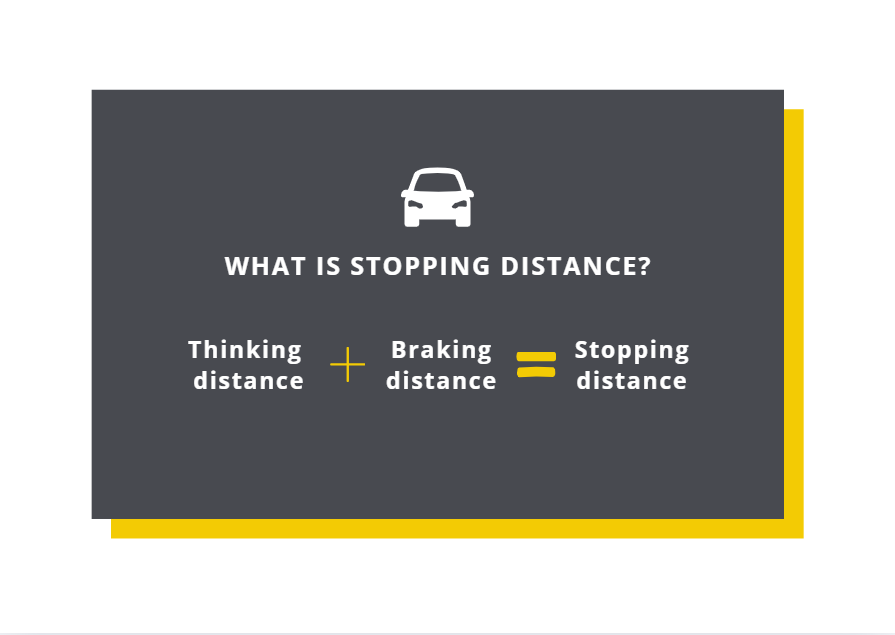
    Stopping distance, as road safety charity Brake explains, “includes the distance travelled while the driver notices a hazard and applies the brakes (thinking distance), and while the vehicle comes to a full stop from its initial speed (braking distance).”

    Snow and icy weather

    The RAC says “Braking distances can be doubled in wet conditions but as much as ten times longer on snow or ice.”

    This increase in stopping distance is because ice reduces the friction between your tyres and the road surface, making it harder for your tyres to grip.

    Brake notes that the extent of icier weather on UK roads has drastic consequences. In 2019, for example, there was an average of four deaths and serious injuries per day.

    Mark Newberry, Commercial Director at Green Flag, said: “Taking extra care and adapting to wet and icy weather conditions by reducing speed and increasing braking distances can give drivers extra seconds to react and has the potential to prevent a serious collision. Headlights are also crucial to help boost visibility, not only for drivers to see better themselves, but be seen by others, too.

    “To prepare for your journey, check the weather forecast before setting off – pack a coat, umbrella and ensure mobile phones are fully charged, look out for each other and stay safe.”

    If you think you are the victim of a road traffic collision that was at least partially someone else’s fault get in touch with our specialist serious injury team for no-obligation advice. 

    Think your injury isn’t “serious”? If it affects your day-to-day life in any way, then it is serious.

    Sources

    The latest articles from us